Most IT businesses don’t track turnover costs until they cost them money. One resignation leads to another, and momentum disappears somewhere between the exit interview and the hiring post.
But retention issues are more expensive than companies realise. Gallup puts the national cost of voluntary turnover at around £1 trillion each year.
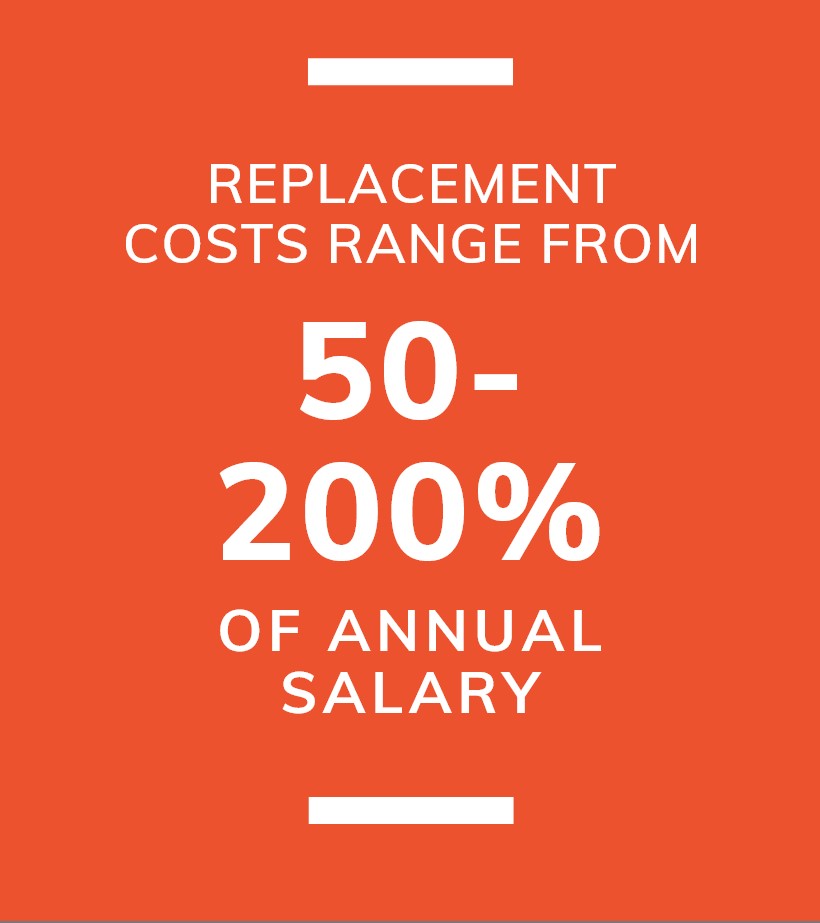
The cost of replacing just one employee is rarely just the recruiter’s fee or the job ad. Meetings get pushed back, time is lost to training, and internal trust takes longer to rebuild than expected. Depending on the role level, that cost can be between half and twice the employee’s annual salary.
Still, the true impact often goes unnoticed because it’s gradual. A team loses its rhythm, another project falls behind, and a manager spends weeks backfilling instead of coaching. These moments are hard to put a price on.
Retention is often described as an HR function. In practice, it’s a financial one. Here, we’ll examine turnover costs, why traditional math falls short, and how leaders can make choices that protect people and the bottom line.
Key Takeaways: What Employee Turnover Really Costs
When someone leaves your IT team, the effects don’t always appear in the accounts immediately. The handover is quick, a few job ads go live, and work gets divided until someone new comes in. On the surface, it all seems manageable.
What rarely gets noticed is how much that process costs-not just money but time, focus, and continuity. According to SHRM, the average cost of hiring a single employee is around £6,700. That includes recruiter fees, background checks, and onboarding basics, but it doesn’t reflect the following weeks or months of reduced capacity.
The numbers that usually get tracked are the hard, direct costs. The quantifiable expenses that are easy to see:
These are the visible costs. They're easy to explain in a budget meeting. But they only account for part of the total.
There’s a second layer of indirect, softer costs. That’s the cost of lost momentum. The missed handover. The pressure falls on colleagues who now carry someone else’s work and their own. These harder-to-measure losses include:
These hidden costs often make up over half of a business's turnover. Research by Josh Bersin suggests the total cost of replacing someone can be anywhere from 1.5 to 2 times their annual salary and over 200% for senior roles.
That figure might sound high, but the math starts to make sense when you include time, productivity, customer impact, and lost expertise.
One reason IT companies often fail to put a full number on what it costs when someone leaves is that the costs are spread across time and departments. But there is a way to get a fuller picture without looking at recruitment expenses.
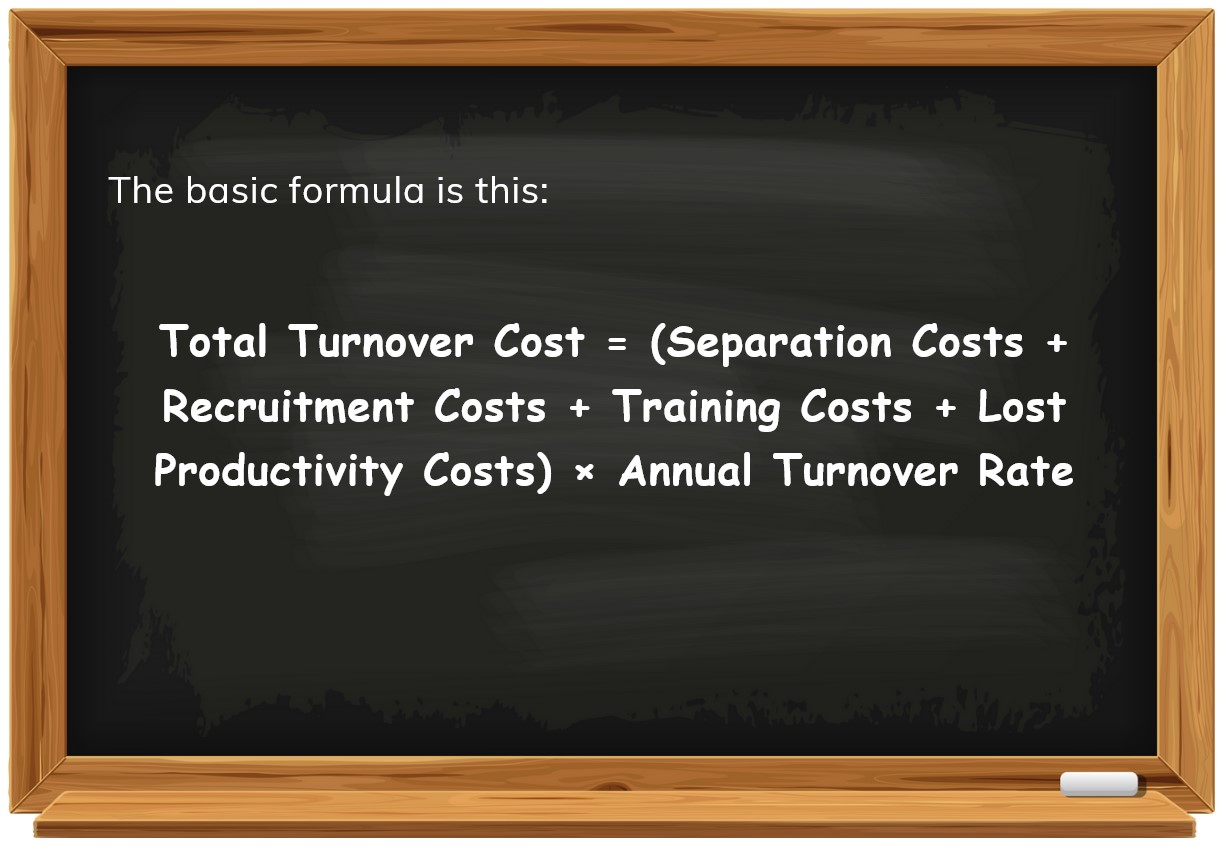
The basic formula is this:
Total Turnover Cost = (Separation Costs + Recruitment Costs + Training Costs + Lost Productivity Costs) × Annual Turnover Rate
Breaking that down a little further, we have:
These are the immediate outgoings of someone leaving the company. It includes any time spent on exit interviews, processing final pay, unused holiday, and sorting through benefits. Often, this involves HR and payroll teams quietly absorbing the administrative load.
Many cost estimations stop here. Recruitment is just one part of the equation. Still, it includes real-time and spend across HR, hiring managers, and external vendors.
Even the best new IT hire needs time to reach their full potential. There’s a curve to every new role, and it takes both time and guidance. These costs show up as slower output, training sessions, and internal mentorship.
This is where most businesses underestimate the damage. When a position sits open, work doesn’t stop; it shifts. Deadlines are missed, pressure grows, and teams often do their best with less. Over time, quality suffers, and so does morale.
Each of these areas adds weight. None of them is individually overwhelming, but they show that turnover is rarely just a staffing issue; it’s a performance one. When IT businesses run this calculation across a full year of departures, the cost tends to land higher than expected.

Letting someone walk out the door is rarely just a staffing problem. It’s a business cost. Still, many companies only realise this after the impact starts to show, lose momentum, overstretched teams, and extra hires that don’t last.
On the other hand, holding onto good people, particularly in a skills-short IT space, almost always saves money in the long run. Sometimes, the savings are clear. Other times, they show up more slowly in stability, trust, and consistent output.
When people are engaged at work, they care about what they do, which shows up in results. According to Gallup, organisations with highly engaged teams are about 21% more profitable than others. That number reflects fewer mistakes, lower absenteeism, and teams that support each other rather than cope.
Recognition also matters. According to several workforce studies, companies that acknowledge contributions tend to see lower voluntary turnover, about 31% lower. It doesn’t need to be flashy. Sincere thanks and meaningful feedback go further than most budgets do.
Let’s put it into perspective. These are examples drawn from research:
The formula for retention ROI looks like this:
ROI = (Total Benefits – Total Investment) ÷ Investment × 100
That sounds clinical. In practice, it just means asking what you gained from keeping someone, and comparing that to what you spent helping them stay.
There’s more to this than dollars. When people stay, they build relationships with IT clients, each other, and the systems they work in daily. That’s knowledge you don’t want to lose. It’s not easy to measure, but it’s often what separates a steady team from a spinning one.
A thoughtful retention plan protects more than payroll. It protects consistency, trust, and reputation. Those are things that money alone can’t buy back once they’re gone.
Most teams don’t set out to ignore retention. It just slips down the list when things get busy. A departure here, a rushed hire there, and the cost builds slowly until someone takes a step back and adds it all up. When that happens, the question becomes simple: where should we start?
A good retention plan doesn’t need to fix everything overnight. It needs to focus early on the areas that make the biggest difference.
Start by running the numbers. Not to understand what’s at stake.
These numbers help shift conversations from assumptions to evidence.
Some actions are expensive. Others aren’t. Focus on the second group first, the ones that create steady value without needing major investment. For instance:
The goal here is consistency. Even small, well-kept promises build trust over time.
Once changes are in motion, start tracking what you’re learning.
The right measurements don’t just show whether a strategy is working; they also help shape what to try next.
Not every fix will work the first time. Retention is less about solving problems quickly and more about building lasting relationships. If the foundation is there-respect, clarity, and trust-most people will give their work and their employer the benefit of the doubt.
Turnover in the IT industry isn’t just a line in a budget. It’s a person leaving, a team adjusting, or a role left open while others take on more. That’s why understanding the cost matters-not to make it about money alone but to show what’s at risk when people walk out the door.
When leaders start considering retention as a strategic investment, things begin to shift. Conversations get clearer. Priorities get sharper. Instead of reacting to exits, organisations plan around staying, building systems that support performance, trust, clarity, and long-term alignment.
There’s no one-size-fits-all solution. Some teams will focus on better onboarding, while others may rework recognition or shift how managers lead. The important part is starting-not with a perfect plan but with a commitment to paying attention to what’s working, what people need, and what it really costs to start over.
Because most of the time, the cost of keeping a good person isn’t nearly as high as the cost of losing them.