By 2026, IT leaders won’t just be asking how they can hire faster or find more talent; they’ll be paying more attention to keeping the people they already have. As of 2025, around one in four workers plan to leave their roles in the UK alone.
That’s not just troubling from an HR perspective. Every lost employee means lost productivity, diminished momentum, and problems with morale. It's no wonder that nearly 90% of leaders rank retention as a top priority this year. The trouble is that turnover isn’t a result of just one thing.
Employees are disappearing for various reasons, including skill gaps, issues with workplace culture, and concerns about management’s approach to wellbeing and work-life balance. So, how do IT leaders ensure they can hold onto their best people next year?
Anyone who has managed an IT team knows what happens when someone leaves. The first week is about covering their work. The second is about realising how much they knew that no one else does.
Then there’s the shift you can’t quite measure - the drop in energy, the sense that people are wondering if they should be next. Turnover doesn’t usually cause a significant financial impact all at once. It wears at the edges until things feel thinner than they should.
The reasons people decide to move on are typically spread across a few pillars:
Then there are factors such as the growing demand for flexible work and the continued pursuit of purpose (particularly among younger employees) to consider.
Here’s what IT leaders need to focus on right now.
A good salary will always matter. It is the foundation of any healthy working relationship. Yet by itself, it rarely keeps people for the long haul. In 2026, employees are seeking something steadier, proof that their employer values their financial well-being as much as it values quarterly results.
Companies will have to think about the practical support they can offer struggling teams, such as:
All these things demonstrate to IT staff that their employer wants them to feel safe, supported, and prepared to manage whatever comes next.
Work changes quickly now. One year, you are the person everyone goes to for help with a system, the next, that system is gone. It is not just technology moving things along; markets shift, regulations change, and whole IT job functions can disappear almost overnight.
Some individuals keep up by learning at their own pace. Others start to wonder how long before their skills run out of road. The World Economic Forum predicts that the skills required for most jobs will change by approximately 70 % by 2030.
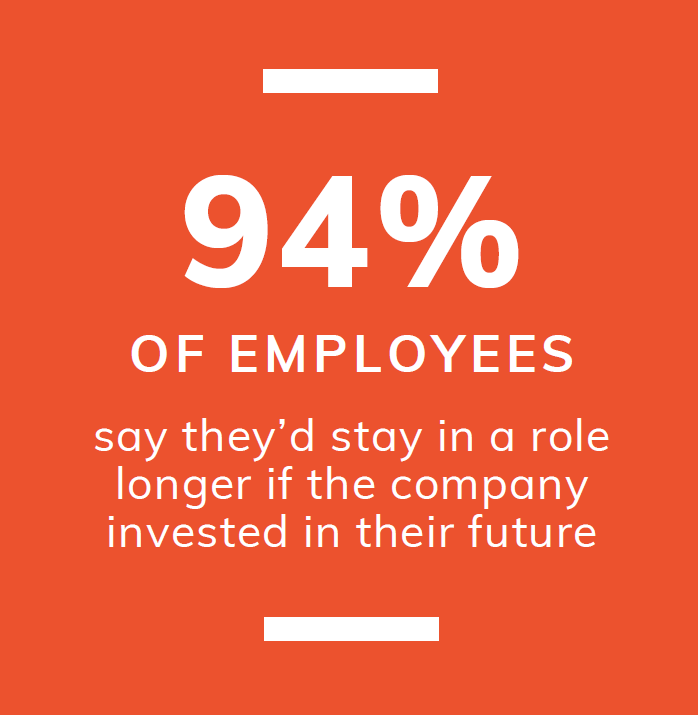
Fortunately for business leaders, the link between growth and loyalty is strong. 94% of employees say they’d stay in a role longer if the company invested in their future.
Take a practical approach to your team’s growth and development:
Growth is a kind of safety. When people feel prepared for what’s next, they stop scanning job ads for someone who might prepare them better.
Most companies now offer some form of flexibility. Depending on who you ask, up to 87% of UK companies offer some form of hybrid work policy. However, flexibility alone is no longer the differentiator. What matters is how well those policies really work.
Flexibility that feels human starts with trust. It is the difference between being told “you can work from home two days a week” and knowing your manager measures you by outcomes, not the hours you spend at your desk. When teams are judged on results, the location of the laptop matters less than the quality of the work.
Also, be ready to experiment and adapt to discover what really works. When flexibility is genuine, it provides people with the space to balance work and life. That space is often what keeps them.
Wellbeing has moved from the edges of IT company policies to the centre of retention. It is no longer an optional benefit. When people feel worn down, they do not just lose energy for work; they start planning their exit.
According to Deloitte, while many employees now expect businesses to invest in their well-being, 44% still don’t feel fully supported. The key to success is in embedding wellbeing initiatives deeper into the day-to-day culture:
When well-being is integrated into the way a business operates, people notice it. They work differently, recover more quickly, and have a greater reason to stay.
Purpose is what ties people to a place. If your IT employees don’t believe in what your company stands for, or can’t see how they contribute to it, their loyalty starts to fade. In fact, 73% of employers in the UK believe purpose and values influence staff retention.
Purpose doesn’t have to mean solving global problems. It can mean knowing the product makes customers’ lives easier, or that the team’s work matters to the community. The point is clarity and connection.
Simple practices can keep that connection alive:
When people see their values reflected at work, they stop thinking about “the company” and start thinking about their place in it. That feeling is hard to walk away from.

Keeping good people is rarely about one big change. It is the small, steady adjustments that add up. The trick is to start before the cracks appear.
By late 2025, it's time to take a proper look at where you stand. Not just the benefits package or the policies on paper, but how work actually feels day to day. That means listening, through surveys, and in conversations where people can speak openly. Sometimes the most useful feedback comes in the side comments, not the formal answers.
As 2026 begins, turn what you have learned into visible action. If people want more flexibility, show them what that will look like in practice. If managers need better tools to support their wellbeing, provide them with training that fits real-life situations, not just theory. Onboarding is another quiet win—done well, it can make the difference between someone staying and leaving before their first anniversary.
By mid-2026, the focus should shift to momentum. Career paths that feel real, cultural habits that reflect shared values, and learning opportunities that keep pace with change. Retention works best when people do not have to think about it. They feel like they belong.
Retention in the IT industry can be challenging to measure in real-time, so it helps to keep an eye on a few steady indicators. Some are numbers you can track easily. Others are quieter signals you only catch if you’re close enough to see them.
Retention in 2026 will come from steady, visible evidence that you care for the people who make the business work. That means building stability into pay and benefits, creating clear paths for growth, offering flexibility that works in practice, making wellbeing a daily priority, and keeping purpose at the heart of the work.
For recruitment companies and HR leaders, this presents an opportunity to move beyond filling roles into shaping environments where people want to stay. Don’t underestimate the value of retaining your best people. In 2026, you really can’t afford to lose them.
Keeping good people is rarely about one big change. It is the small, steady adjustments that add up. The trick is to start before the cracks appear.
By late 2025, it's time to take a proper look at where you stand. Not just the benefits package or the policies on paper, but how work actually feels day to day. That means listening, through surveys, and in conversations where people can speak openly. Sometimes the most useful feedback comes in the side comments, not the formal answers.
As 2026 begins, turn what you have learned into visible action. If people want more flexibility, show them what that will look like in practice. If managers need better tools to support their wellbeing, provide them with training that fits real-life situations, not just theory. Onboarding is another quiet win—done well, it can make the difference between someone staying and leaving before their first anniversary.
By mid-2026, the focus should shift to momentum. Career paths that feel real, cultural habits that reflect shared values, and learning opportunities that keep pace with change. Retention works best when people do not have to think about it. They feel like they belong.