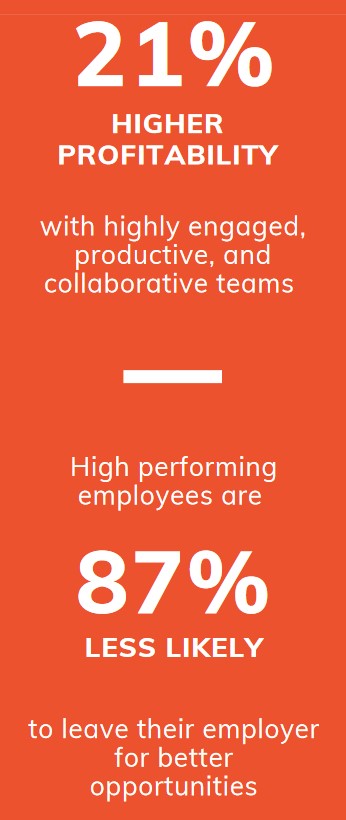
High-performing teams have always been crucial to success in the IT sector. Studies from Gallup show that highly engaged, productive, and collaborative teams can lead to 21% higher profitability in any organisation. In an era of growing skill shortages and employee turnover, building a high-performing team can help you retain crucial talent.
High-performing employees are 87% less likely to leave their employer for better opportunities. Unfortunately, building and maintaining a high-performing team is increasingly difficult in today's complex business landscape.
The uncertain economy, evolving recruitment trends, and changing employee priorities mean many business leaders struggle to not only recruit the right IT talent but also consistently nurture and preserve high levels of engagement.
The good news is that with the right plan, you can develop a more profitable and engaged team and build resilience into your workplace culture, ensuring you're prepared to tackle an ever-evolving array of challenges in the IT landscape.
Here's your five-step guide to building a team that consistently performs in the face of new evolutions, challenges, and opportunities.
Before diving into the crucial steps in building and retaining a high-performing IT team, it's important to clarify how high-performing teams differ from their peers.
They aren't just productive and efficient in the workplace; they are defined by a specific set of characteristics, such as:
High-performing IT teams are aligned in their focus, goals, purpose, and priorities. They work collaboratively towards a shared vision, and each team member is accountable for ensuring ongoing success.
Because high-performing teams have clear goals and an established purpose, they're typically more engaged and productive. They're connected with their colleagues and have a good work/life balance, minimising the risk of burnout.
A collaborative workplace and strong communication skills are central to a high-performing IT team. Effective employees are emotionally intelligent, empathetic, and skilled in overcoming conflicts.
High-performing teams foster a culture of continuous growth and improvement through open and constructive two-way feedback. They respond positively to insights from their peers and feel comfortable sharing ideas, concerns, and suggestions.
These teams adopt a growth mindset to ensure constant innovation and development. They learn from their mistakes, respond well to challenges, and show resiliency and dedication to continuous learning.
DEI initiatives are common in high-performing teams, as diversity often catalyses growth and innovation. Cross-functional collaboration paves the way for consistent knowledge sharing and peer learning.
In today's complex workplace, building a high-performing team that shares all of these characteristics can be challenging.
Many organisations will need to reevaluate everything from hiring key employees to ensuring ongoing engagement, building effective company cultures, and developing their team members.
Let's dive into our step-by-step guide to build your high-performing team.
The first step in developing a high-performing IT team is analysing your existing workforce, business goals, and recruitment targets. To determine exactly who you need to hire and which skills will benefit your team in today's world, you need to set clear organisational goals.
Bring key business leaders and stakeholders together to identify a strategic roadmap for growth, connecting your recruitment targets to your wider goals as an organisation.
For instance, this year, your goals may be to expand your workforce, branch into new markets, and build a more skilled workforce to adhere to changing trends.
To do this, you may need to fill certain gaps in your talent pool.
Consider:
Which team members do you rely on in your business to ensure you outperform the competition, attract and retain customers, and maintain profit margins? How many team members do you currently have with these skill sets, and are core competencies in your workforce changing in any way due to digital transformation or changing market dynamics?
Which skill sets aren't available in your existing team, and how important are they to your long-term goals? Do you need to hire more digitally literate employees to adhere to the growing presence of new technologies like AI and automation in the tech space? Do you need more people with leadership skills and a growth mindset to ensure ongoing growth and resiliency?
Which team members already show proficiencies you can build on? Do you need to hire a range of new employees, develop and train a handful of internal team members, or both?
When planning how to develop your team, remember the importance of diversity. According to several LinkedIn studies, diverse companies produce up to 2.5 times more cash flow per employee and achieve 35% better productivity.
Embracing diversity in your recruitment and business development strategies will help you attract a wider selection of talented team members, boosting your employer brand and increasing engagement among existing members of the team.

There are numerous ways to approach recruitment when building a high-performing IT team. Some business leaders mistakenly think an in-house process will save them time and money when finding talent. However, in a skills-short market, around 80% of businesses face constant difficulties filling job roles.
An IT recruitment company gives you a critical edge when building the ultimate team, leveraging tailored strategies specific to your goals and needs to boost your chances of success.
They will save you money long-term by ensuring you make the right hiring decisions, focusing on employees who will benefit your company culture and stay with your business longer. Working with an IT recruitment company gives you access to benefits like:
A broader talent pool:
They will expand your reach to top talent, helping you find potential employees from various environments. Thanks to their extensive networks, they can access active and passive candidates and help you connect with emerging candidates and graduates to expand your reach.
Improved diversity and inclusion:
Diversity is crucial when building a high-performing IT team, but unconscious bias can still hinder diverse hiring decisions. A recruitment company can help eliminate unconscious bias using different strategies and step-by-step guidance throughout talent sourcing.
Enhanced candidate experiences:
Recruiters can work with you to improve the candidate experience and boost your chances of talented candidates accepting your job offer. They can support you in designing more effective job descriptions, help you communicate regularly and transparently with job seekers, and collect feedback from candidates.
A more powerful employer brand:
The expertise and insights an IT recruiter has into your industry can help you build a more powerful employer brand and employee value proposition.
Valuable insights and expertise:
Recruitment companies' expertise in the hiring landscape is invaluable to business leaders. The right team can assist you in developing stronger interview processes and help you understand how to hire the right balance of employees to support your company culture. They ensure you have the best opportunity to hire team members who are the right fit for your organisation.
Optimised recruitment strategies:
Recruitment teams save you time and money on the recruitment process, tackling various tasks like talent sourcing and filtering on your behalf, so you have more time to focus on making the right decisions for your IT landscape. Some can even leverage cutting-edge tools, like AI and applicant tracking systems, to bring more efficiency into your recruitment process.
When choosing an IT recruitment company to partner with, look for an agency with extensive experience working with talent and employers in your sector. Ensure your chosen company can also offer the right level of support, whether working with you consistently on building a talent pipeline or assisting you with employer brand development.
Developing the ultimate high-performing IT team doesn't only mean hiring the right candidates to fill talent gaps in your organisation. You also need a strategy to adapt to changing industry dynamics.
Start by considering how your talent needs may differ over time as new trends emerge in your industry. For example, businesses now struggle with an IT skills gap. Digital literacy is becoming crucial to success in every sector as companies embrace various innovative tools and technologies.
Next, think about your succession strategy. How will you identify talent readiness in your company and determine which employees are ready for promotion and new responsibilities? How will you prepare your team members to take positive steps forward in their career paths?
Other key steps to take to ensure you're prepared for the future include:
Effective leadership ensures your high-performing IT team can thrive going forward. Leaders need to be trained to show empathy, emotional intelligence, and a creative mindset. They need to facilitate change in the organisation, encourage team members to take risks and explore new opportunities, and keep staff motivated and engaged at all times.
Resiliency will be essential in the years ahead as IT market dynamics change. Create team resiliency by building a collaborative company culture, focusing on shared trust, accountability, and support. Look for ways to minimise burnout with wellness programmes and support team members in the quest for a better work-life balance.
While salaries aren't the only thing that encourages employees to stay with your business, ensuring fair remuneration can help reduce turnover. Ensure you closely monitor whether you pay your team members what they're worth. Find ways to offer benefits that offset lower salaries, such as flexible working options.
It may also be helpful to host regular meetings with your IT recruiter where you can assess your current team dynamics and source insights into growth opportunities.
As the IT landscape continues to change, constantly investing in the development of your team members is crucial to maintaining high levels of performance. Technical proficiency is important, and many characteristics of high-performing teams revolve around soft skills and transferrable skills that boost team resilience.
Most employers say they need to see evidence of essential soft skills in their team members, often starting with a capacity for adaptability.
Assessing and building on your employee's soft and hard skills will help you to create a more agile team that can adapt to changes in your industry. Look at factors like:
Which new or existing technical proficiencies are essential to your IT team's success? How can you assess an employee's talents and build on existing skill sets with training, mentorship, or online classes? How will you identify valuable new skills as they emerge in your industry?
For instance, will you ask for insights from your recruitment team or analyse competing companies yourself?
Emotional intelligence is becoming increasingly important in today's IT landscape, particularly as the space evolves. A high level of emotional intelligence ensures candidates can stay resilient in changing market dynamics. It also allows employees to preserve their mental and physical health, reducing the risk of burnout and absenteeism in your organisation.
Certain soft skills are essential in all industries. The ability to communicate clearly, manage time effectively, and work well with others will be valuable for all your team members. Consider implementing training initiatives, mentorship, and peer learning programs that will help develop soft skills.
It is also important to think about how you'll monitor the success of your high-performing teams. Which metrics will you regularly assess and review, such as employee engagement levels, the ability to adhere to deadlines or customer satisfaction scores?
Ensure your team members know how their performance will be analysed. Regular meetings between business leaders and staff to promote open communication and strategic professional development.
The best high-performing IT teams are constantly evolving. In fact, it is a commonly recognised fact that high-performing teams are more effective at implementing innovations and changes than most. However, to take advantage of this, companies and business leaders need to ensure they're nurturing continuous improvement.
The best way to build a constant growth and development culture is to nurture a growth mindset in your IT employees.
Encourage regular self-assessment, ask them to examine their strengths and development needs regularly, and look for improvement opportunities.
Help them to see failures and mistakes as opportunities for growth, and create an environment of psychological safety where your people will feel comfortable taking chances and trying new things. Other effective ways to encourage continuous improvement include:
Encourage your IT team members to be agile and experimental. Show them how to evaluate the success of various initiatives and activities and work collaboratively to improve processes based on your discoveries. Give your team members autonomy to experiment with new strategies whenever possible.
Feedback is crucial to optimising the performance of any team. Business leaders must share valuable, meaningful, and actionable feedback with staff members, celebrating their successes and helping them overcome failures. Similarly, leaders need to be open to receiving feedback from team members and sourcing insights into improving processes.
Experiment with various development strategies, from one-on-one mentorship programmes to on-the-job training, to develop practical experience and gather insights into which development opportunities drive the biggest benefits for your team.
It's also worth encouraging your team members to constantly expand their knowledge of the IT industry and their networks. Share valuable industry news with staff members during regular monthly reviews and meetings.
Ask staff members to attend tech events and conferences to listen to keynote speeches, connect with other professionals, and engage in workshops. Promote cross-functional collaboration between different business groups to unlock diverse insights and opinions that can help you take positive steps towards future growth.
A high-performing IT team has never been more important to business success. As the landscape continues to evolve, introducing new challenges, growing levels of competition, and changing customer expectations, businesses need to ensure they have the right talent to navigate the transforming industry.
While developing a high-performing sector team in the current market is more challenging because of skill shortages, rapid turnover, and changing employee priorities, it's possible with the right strategy.
Start by considering how you'll build an effective team and implement a plan for constantly evaluating and recognising skill gaps. Partner with recruiters to expand your reach in the talent market and optimise your employer brand.
Plan for the future with succession strategies, and commit to hiring and developing agile, resilient employees. Then, ensure you're constantly enhancing your IT team with regular reviews of hard and soft skills, consistent training, and a culture focused on collaborative growth.
Finally, ensure you have the right plan for continuous improvement and optimisation, from implementing two-way feedback to exploring opportunities for long-term development.
These steps will help you build a more productive, efficient, and resilient team to manage evolving changes in your industry. Moreover, the right strategy will boost your employer brand and help you attract and retain talent more effectively so you can avoid struggling constantly with a skills-short environment.