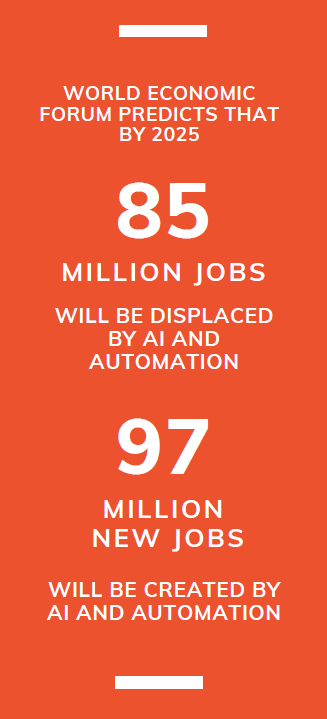
Every year, the hiring market shifts, affected by countless changes, from technology transformations to new generations in the candidate pool. 2025 is set to present a range of new challenges and opportunities to candidates as the market begins to evolve faster than ever before. AI and automation are redefining roles across sectors, meaning skills once prized are becoming increasingly obsolete, and new priorities are rising to the surface.
Hiring practices are evolving, too, as business leaders and recruitment teams turn to advanced technology to streamline skill assessment processes and make faster recruitment decisions.
Despite economic challenges, demand for talent is growing, and employers are adapting to new candidate expectations, exploring flexible working strategies, comprehensive development opportunities, and unique benefits packages.
The good news for candidates is that opportunity still abounds in this new environment, but you will need to adapt your strategy to achieve
your career goals.
2025 will be the year when candidates need to double down on building resilience and adaptability, developing new diverse skill sets, and elevating their personal brands.
This guide will introduce you to the significant hiring trends you'll need to be prepared for in the years ahead and the steps you can take to boost your chances of career success in 2025.
Best wishes,
Rachel
Technology, particularly AI and automation, is set to redefine roles across every industry.
Digital literacy and the ability to work seamlessly with cutting-edge technologies will be increasingly important in the years ahead.
At the same time, the growth of AI and automation will make certain human skills, such as resilience, creativity, and empathy, more important to business leaders. From another perspective, intelligent technologies in the recruitment landscape will reshape the nature of job-seeking.
Recruitment processes will become increasingly digital.
Companies will rely on AI and automated tools to research candidates, filter through CVs, and automate skill assessments. This means job seekers will need to invest more heavily in their online presence, develop a strong personal brand, and adapt to new interview and assessment processes.
The workplace has been evolving for several years, focusing on flexibility, diversity, equity, inclusion, and versatility. Companies will likely continue to explore flexible working policies to adhere to changing employee priorities.
Additionally, flexible work will help businesses reduce their carbon footprint and operational costs and design more attractive benefit packages for new generations of candidates. While this shift could lead to greater work-life balance for staff members, it will also mean that employees must adapt to a new workplace environment, where they'll need to collaborate consistently with team members from different backgrounds and cultures.
In 2025, the focus on diversity, equity, and inclusion will continue to grow, and businesses will continue to search for new ways to improve worker wellbeing and fight back against growing issues with burnout and the "quiet quitting" phenomenon. Plus, there will likely be an increased focus on skill development and training as companies adapt to new market dynamics.
In this landscape, candidates must set clear priorities, improve soft skills in communication and collaboration, and nurture adaptability to ensure they can excel in the face of any new challenge or initiative.

Numerous hiring trends have emerged in the last few years. Some are affected by changing government regulations, like the rising demand for experts to fill ESG (Environmental, Social, and Governance) roles. Others are a direct response to workplace changes, such as the rise of technology, the arrival of new generations of workers, and the increasing complexity of recruitment.
Overall, the most significant hiring trends we expect to see in 2025 include:
The Rapid Integration of Technology into Hiring Strategies
The Skills Evolution and Demand for Learning Velocity
The Transformation of the Workplace
As mentioned above, technology has significantly impacted the recruitment process in the last year and will continue to do so in 2025. AI and automation are influencing more than just the skills companies seek in staff. They're also affecting how teams find, validate, and assess candidates.
First, companies are leveraging more advanced artificial intelligence in recruitment. They use machine learning and intelligent tools to rapidly gather information about candidates from numerous sources (including CVs, social media profiles, and more). They're embracing AI to streamline CV screening, enhance interview scheduling, and even improve candidate engagement through automatic messages sent by chatbots.
While AI and automation won't replace the need for human beings in recruitment, they will help accelerate recruitment cycles when used correctly. Some tools can even help companies create tests and assessments to evaluate candidate skills and competencies. Plus, there are systems that can use predictive analytics to rapidly identify which candidates are most likely to excel in roles based on their skills, attributes, and experiences.
In the interviewing landscape, there's also been a significant increase in the use of digital solutions to interact with and assess employees.
Alongside video interviewing tools, which have become increasingly commonplace in recent years, some companies are beginning to experiment with virtual and augmented reality interview processes. Extended reality could pave the way to simulated skill assessments in the future hiring landscape.
These virtual interview strategies will become even more valuable in the years ahead as businesses continue to recruit global employees to expand their talent pools.
The skills employers prioritise have changed in the last couple of years. According to a PwC survey, more than half of today's employees believe that the skills they'll need for their roles in five years will be completely different from the ones needed today. Employers are beginning to prize specific capabilities over traditional qualifications.
Some previously valuable skills, such as manual coding abilities and confidence with basic data entry, have become obsolete in the age of AI and automation. Increasingly, employers are looking for specialists with a broad range of technical skills, human skills, and hybrid capabilities.
From a technical perspective, digital literacy, confidence in data analysis, and software proficiencies are becoming increasingly crucial. Many employers are specifically searching for candidates who can take advantage of the latest AI tools and rapidly adapt to new systems and software solutions as they emerge.
From a human skill perspective, employers seek employees with the adaptability, resilience, and growth mindset required to thrive in a transformative environment. They also need candidates with excellent emotional intelligence, collaboration, communication, and problem-solving skills who can work well in a diverse global team.
Hybrid skills and cross-functional capabilities are also becoming increasingly important. Hybrid skills, like "digital leadership", combine soft skills related to motivation and conflict resolution with technical skills like using collaboration software and project management tools.
Cross-functional capabilities, on the other hand, allow candidates to bring more versatility and adaptability to organisations. For instance, a marketing specialist with a knowledge of data analytics and science can provide more value to an employer.
These skill revolutions will make "learning velocity” particularly critical in 2025. Candidates must embrace a learning mindset and commit to constantly improving their abilities through courses, certifications, or peer-to-peer educational experiences.
Changes to the workplace have been taking place for several years now. Countless companies have begun to embrace new working models, going beyond traditional remote work or in-office opportunities. In the UK and other regions worldwide, firms are experimenting with new flexible schedules, four-day work weeks, and hybrid work.
Flexible workplaces will be a mainstay in 2025 as businesses look to reduce costs and improve work-life balance among team members.
Thanks to new work models, performance management processes will also evolve. Many companies are already prioritising "outcomes" over things like "number of hours worked"." Candidates who can demonstrate results-driven achievements on resumes and during interviews will generally gain more attention from recruitment teams.
Additionally, career progression paths will gain more focus in the year ahead as companies face increased pressure to upskill and reskill rather than replace workers.
Candidates may be able to look forward to a broader range of development and learning opportunities as employers look beyond traditional classes and workshops to build mentorship programs and immersive experiences.
Showing your employer that you're open to continued learning and improvement will give you a significant edge in this new landscape.
Beyond the three major trends mentioned above, there's one other significant change candidates may be able to look forward to in 2025: a greater focus on candidate experience.
As skill shortages grow and candidates become more selective about the companies they choose to work with, candidate experience is emerging as an essential differentiator for many firms.
Employers can't afford to lose top talent because of slow, outdated, or impersonal candidate experiences.
That's particularly true in an environment where candidates are increasingly relying on reviews and reports online when deciding
whether to apply for a company role.
On a broad scale, we can expect significant changes to:
Application Processes and Assessment Methods
Interview Innovations and Feedback Evolutions
The Transformation of Onboarding
The application process is a candidate's first opportunity to "evaluate" a company's approach to supporting its team members. The more complex and confusing the application, the more likely companies will miss out on top talent. In 2025, organisations will prioritise making applications more straightforward, mobile-friendly, and automated.
AI-driven platforms could even emerge to offer personalised guidance to candidates throughout the application process. They're already helping teams sort through applications faster, allowing them to make decisions faster.
Assessment methods are evolving, too, based on employer requirements for specific skills in their staff members. Instead of generic aptitude tests, companies are experimenting with skills-based assessments, personality tests, and gamified simulations.
As mentioned above, interviews in 2025 will involve more digital experiences, such as asynchronous and synchronous video interviewing and even interviews in extended reality. Companies may also begin to use AI throughout the interview process to take notes and help them score candidate responses objectively, reducing the risk of unconscious bias.
Behavioural interview questions will become even more popular as companies begin to prioritise candidates with specific characteristics and experiences. Additionally, some companies might start to involve more stakeholders in the decision-making process, increasing the number of team—and panel-based interviews used in the future.
The good news for candidates is that companies will also be upgrading their feedback mechanisms, using AI and automation to keep them informed throughout the job application process and share valuable insights they can use to improve.
Countless studies from companies like the Harvard Business Review have proven that effective onboarding improves a company's chances of making a successful hire. The right onboarding strategy is critical to retaining employees in a skills-short space.
In 2025, business leaders will likely invest more time into highly personalised and engaging onboarding experiences. Going beyond simply filling out paperwork, companies will provide staff with tailored resources, help immerse them into the company culture with team introductions and invest in early personal development planning strategies.
We should see an increase in more comprehensive onboarding strategies that provide team members with a mentor or consistent source of support they can turn to throughout the initial stages of their employment.
Surviving and thriving as a candidate in the shifting job market will mean taking a new approach to building a powerful personal brand, developing a structured learning pathway, and positioning yourself as the ideal candidate for your preferred employer.
The most important things candidates will need to focus on this year include:
Personal Brand Development
Creating a Strategy for Skill Development
Developing Resilience and Adaptability
Personal Brand Development
Employers are increasingly looking beyond CVs and cover letters to identify whether a candidate is a good fit for their team. They're looking for evidence of your technical skills, credentials, achievements, personality attributes, and unique qualities.
The first step in ensuring your personal brand attracts the right employers is auditing your digital presence. Examine your social media profiles (particularly LinkedIn), and make sure they highlight your achievements, interests, and skills. Keep your profiles updated with recent roles and accomplishments and look for ways to demonstrate thought leadership.
Share examples of your work and projects on your social media profiles and personal website (if you have one). Talk about trends in your industry and share your opinions on the market as it evolves. Curate and share reports that other members of your network find valuable.
Speaking of your network, you must be committed to constantly building it in 2025. The right network not only gives you more credibility as an employee, but it can also open the door to new job opportunities, help you find valuable peers and mentors, and give you insights into new learning and development pathways. Join social media groups, attend virtual and in-person events, and connect with as many relevant individuals as possible.
As the skills that employers are looking for continue to change at an increasing rate, developing a comprehensive strategy for constant growth and education will be crucial in 2025. Start by creating a clear learning pathway based on your career goals.
Identify the most valuable technical, soft, and hybrid skills that will appeal to employers in the next couple of years and decide which you'll be prioritising first. A careful self-assessment process should help you to identify your strengths and weaknesses compared to other candidates and give you a framework to build on when establishing short, mid and long-term goals.
Once you've identified the skills you need to develop, explore various learning options.
Look into professional certifications and classes that can give you additional credentials to add to your CV. Take part in online and offline workshops, or attend webinars to expand your knowledge. Join industry communities for peer-to-peer and mentor-based learning opportunities.
Additionally, look for ways to develop new skills with hands-on experience. Take on voluntary projects in your current role or consider freelance work or volunteering to build your experience. This will help you hone your abilities and give you more experience to draw on when answering questions in interviews or building out your portfolio.
You must develop emotional grit, resilience, and adaptability to ensure you're ready to thrive as the market changes.
Begin by ensuring you can stay current with the changes happening in the job market and your sector. Pay attention to new job roles and their responsibilities as they emerge. Look at the unique skills and attributes employers seek and think of ways to make yourself more valuable to any company in the long term.
Take a proactive approach to staying on the cutting edge of the industry by joining industry networks or working with a recruitment company. A recruitment company will be able to give you insights into evolving market trends and even help you discover new learning opportunities throughout your career.
Be proactive about risk management, too. Monitor potential disruptions in your industry, such as technological advancements, economic shifts, or regulatory changes. Ask yourself how they'll affect your role and what you can do to prepare for them.
Most importantly, prioritise adaptability and a growth mindset. Develop habits of continuous learning, networking and self-assessment. If you reach a short-term career goal, build on that with a new target or ambition.
Working with the job market when it's changing so quickly can seem daunting. An action plan can give you direction and keep you motivated and focused, even as new challenges emerge. Here's a quick template you can use to develop your action plan.
Based on the current job market, identify the immediate actions you can take to boost your chances of long-term and short-term success. There are plenty of "quick win" options, such as talking to a recruiter, finding a mentor, updating your CV or LinkedIn profile, and researching relevant certifications that might be valuable in your role.
After implementing your "immediate" actions, think about what you can do in the next three to six months to make yourself more competitive. You might take an online course, attend a networking event, or arrange a meeting with your current employer so you can build a personal development plan together. If you're currently looking for a new role, consider contacting a recruitment team and asking for their advice on your next steps.
The length of "mid-term" strategies for career development could vary. Generally, you'll be focusing on what you want to accomplish between six months and two years in the future. At this stage, the steps you concentrate on are likely linked to deepening your expertise in areas relevant to your role (by earning certifications or new credentials) and expanding your network. You might also explore new ways to gain experience that will help you apply for long-term roles.
Next, think about where you want to be in the long-term in your career. Visualise what success would look like to you five years from now. Do you want to be a manager in a specific company? Do you want to shift into a new role? What kind of priorities will you have regarding, for example, remuneration and work-life balance?
Once you have your long-term vision, work back from it to determine whether your short-term and mid-term goals are driving you in the right direction.
Finally, monitor your progress towards your career goals. Define specific metrics you can use to assess your development, such as the hours you spend each week on skill building or the certifications you've earned.
Set success indicators to mark achievements along the way, like receiving positive feedback from a mentor or getting invited to a job interview. Additionally, ensure you have someone you can review your progress with, such as a mentor, career coach, or someone you trust.
They'll be able to give you constructive feedback and external perspectives you can use to increase your chances of long-term success. As you reach each goal, reassess and refine your plan, setting new targets that keep you challenged and moving forward.
As the job market continues to evolve in 2025, candidates will have many changes to navigate. Some will be positive, such as the increasing focus of employees on work-life balance, employee wellbeing, and diversity, equity, and inclusion. Others will mean you need to rapidly adapt and address new challenges - like adjusting to the rise of AI and automation in the workplace.
The path ahead will have numerous hurdles to overcome. However, suppose you take a proactive approach to understanding the job market, enhancing your skills, building a strong personal brand, and expanding your network. In that case, your chances of success are much higher.
Remember, a recruitment company can also be a valuable guide throughout this journey, giving you the support and insights you need to adjust to upcoming market changes. Please take what you've learned in this guide, and use it to become a more resilient, flexible, and adaptable employee throughout 2025 and beyond.