Gallup found that engagement levels have fallen for the first time in four years, dropping below 25%, a worrying sign for companies already struggling with low productivity.
The cost of disengagement, burnout, and generally unhappy employees is massive. It’s not just that team members silently “clock out” at work or make more exhaustion-related mistakes.
They abandon ship when a new offer comes along, harm your recruitment efforts by sharing their (less than great) experiences online, and leave you struggling to stay competitive.
So, here’s the question: What if developing and maintaining a high-performing team wasn’t just about getting more out of your people?
What if it were about supporting them more effectively instead?
Happy, healthy workers who don’t feel micromanaged or overwhelmed are more productive, motivated, and likely to stick around.
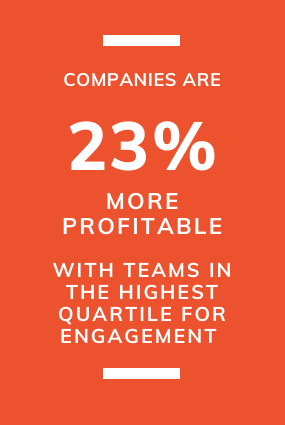
They’re also more engaged. Companies with teams in the highest quartile for engagement are 23% more profitable.
It turns out that great results don’t come from treating your staff members as human beings.
This report will show you how to build, nurture, and retain standout teams based on a foundation of trust, well-being, autonomy, and flexibility.
Not all high-performing teams are created equal.
Some teams hit their targets but burn out doing so, while others produce results only under constant pressure from their manager.
Then there are the very rare teams that work consistently and produce results. Those are becoming harder to find and even tougher to develop.
They’re aligned, energised, resilient, and they somehow make it look easy. These are standout teams. The question is, what makes them different?
Dive into the data and you’ll start to notice some overlapping trends:
Every standout team starts with a clear “why.” McKinsey shares that when employees understand how their work connects to broader goals, they’re more likely to excel (and stick around). That’s particularly true now, as new generations enter the workplace. These employees aren’t just looking for an income; they want to work for a company with a mission and a clear vision.
In standout teams, people feel safe speaking up, challenging ideas, and admitting mistakes without fear. McKinsey’s burnout research shows that psychological safety is one of the strongest predictors of innovation, trust, and resilience and a major factor in preventing emotional exhaustion. Every employee deserves to feel safe in their role.
It’s not just about representation, it’s about voice, input, and problem-solving power. Teams with diverse perspectives are 27% more likely to outperform industry medians. Inclusive environments lead to faster decision-making and more robust outcomes. More perspectives lead to more ways to address problems and grow.
Standout teams operate with high trust and low ego. They communicate openly, share information freely, and coordinate seamlessly. According to Gallup, collaboration and trust are tightly linked to engagement, and teams with high engagement show 41% lower absenteeism and 17% higher productivity.
Static teams get left behind. Standout teams learn constantly, through feedback, experimentation, and open reflection. Adaptability and a focus on development are crucial as companies continue to embrace new technology (AI and automation) and explore new flexible and hybrid working structures.
There’s a big difference between performance and overwork. Standout teams focus on outcomes, not hours. Teams that manage workload balance well are generally more productive, more likely to achieve their goals in fewer hours, and less likely to burn out. All those things lead to a higher-performing, more resilient team.
You don’t need a big title to lead. Standout teams are filled with people who take ownership, solve problems, and support others, regardless of role. Gallup calls this “distributed leadership,” linked to higher engagement and faster decision-making across functions.
If standout teams are the engine of performance, well-being is the fuel that keeps them running.
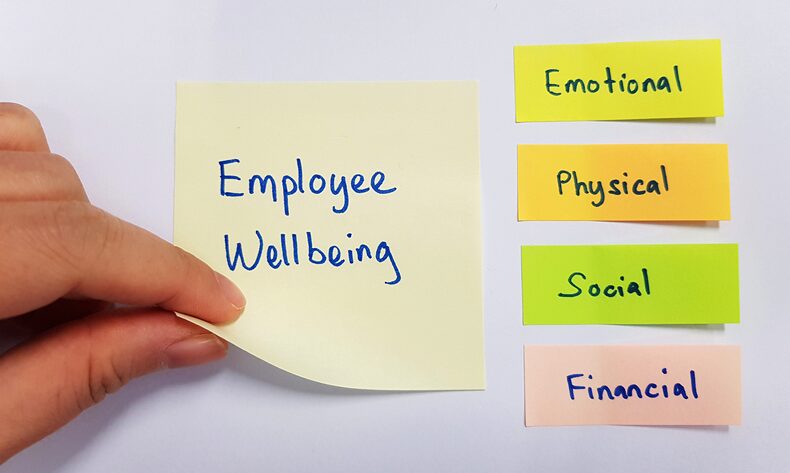
When employees feel physically, mentally, financially, and emotionally supported, they don’t just feel better. They perform better. They focus longer. They collaborate more easily. They take fewer sick days, and they stick around longer. Plus, those benefits multiply when flexibility is built into how people work.
Here’s how wellbeing makes a difference to teams.
Let’s be honest: investing in employee wellbeing doesn’t always sound like a boardroom win. Too often, it gets filed under “nice to have”, a feel-good initiative when times are good.
The truth is that well-being is one of the most under-leveraged performance strategies in business today. Because when people feel physically healthy, mentally supported, and financially secure, they show up better. They focus. They collaborate. They stay. They don’t burn out or call in sick. And they’re far more likely to bring their full potential to work.
Across industries, comprehensive well-being programs deliver an average ROI of 6:1. That means every pound invested returns sixfold through reduced absenteeism, lower health claims, improved retention, and higher productivity.
Johnson & Johnson saved $2.71 for every $1 invested in employee wellness over 10 years, primarily through healthcare savings and better performance.
Deloitte’s analysis of mental health programs showed that poor mental health costs businesses in the UK around £51 billion per year. A mental health wellbeing program can pay off massively depending on how early interventions are provided and how embedded the support is in daily operations.
These returns come from measurable shifts in how people behave and perform when their well-being is supported. The biggest value drivers include:
There’s a reason well-being is showing up in conversations. It’s because healthier employees perform better. They think more clearly, collaborate more easily, miss fewer days, and are far less likely to burn out, check out, or walk out.
It’s not just physical well-being that makes a difference either. Mental health is becoming a priority for every employee and company. Stress drains productivity and creativity, preventing team members from accessing the resilience they need.
Strategies that pay off include:
Healthier bodies support sharper minds. Foundational initiatives like fitness financial stipends, preventive screenings, and on-site or virtual wellness coaching help employees maintain energy and reduce long-term health costs. But here’s the key: access and equity matter. Programs must work for frontline employees, remote workers, and everyone on the team.
Physical wellness improves stamina, lowers absenteeism, and increases productivity across all roles.
This is where the biggest ROI gains are coming from.
In McKinsey’s 2022 burnout report, employees who felt unsupported in their mental health were four times more likely to plan to quit.
High-impact mental health strategies include:
Early mental health intervention drives better recovery, stronger engagement, and significantly longer tenure. It also makes your company more attractive to new candidates.
Stress about money doesn’t stay in people’s inboxes; it spills into their performance, productivity, and even health outcomes. Morgan Stanley found that 49% of employees who worried about their finances spent three or more hours a week thinking about them at work.
Yet most companies still treat it as a personal issue, not a business one. Introducing a financial well-being program paired with flexible pay options, retirement education, or targeted coaching can reduce stress-related presenteeism and improve productivity.
This isn’t just about having flexible hours (we’ll dig deeper into that in the next section). It’s about creating a culture where boundaries are respected, recovery is encouraged, and leaders model balance, not burnout.
McKinsey’s latest research found that employees who feel truly supported experience productivity boosts of between 10 and 21% on average.
Simple strategies that drive impact include:
Well-being and engagement go together.
Employees who report high levels of wellbeing and work-life balance are 59% less likely to seek a new job and 23% more likely to stay engaged long term.
When people are engaged, everything improves. According to Gallup, teams see:
Alternatively, disengaged employees cost businesses an estimated £7.8 trillion globally in lost productivity, roughly 11% of global GDP. So, what drives engagement?
Purpose and meaning are crucial elements of a high-performing team because they help to drive engagement. People in the industry (particularly younger employees) want to do work that matters. When they see how their role connects to the bigger picture, they’re more focused on achieving results and more motivated.
No surprise here: managers shape the daily experience of work. Gallup reports that managers account for at least 70% of the variance in team engagement. Great managers coach, listen, recognise, and shield their teams from burnout. Train your managers to nurture and support high-performing teams actively.
Without room to grow, people stagnate. Teams with access to clear development paths and continuous learning are more likely to stay with your company, and they’re more likely to perform well. Investing in your teams also means you can infuse your staff members with the new skills they need to thrive as the industry changes.
Everyone wants to feel seen and heard. A simple “thank you” goes further than most leaders realise. Employees who think they are meaningfully recognised are 63% more likely to stay in their role. Plus, when you pay attention to and reward high-performing employees, you give your other team members a clear insight into the behaviours they need to mimic.
We’ll cover this more in a moment, but when people have more control over their work, they bring more ownership into what they do. Autonomy is directly linked to creativity, resilience, and higher engagement levels. Today’s companies must trust their employees to make the right decisions and work from any environment that feels right.

For years, flexibility was treated like a luxury—something granted sparingly and only to top performers, certain roles, or special circumstances. Now, it’s a crucial part of improving employee well-being and enhancing team performance.
For many candidates, flexibility is a baseline expectation and one of the most powerful tools companies must use to improve performance, reduce burnout, and attract top talent. Done right, it’s not just about where people work; it’s about how they work best.
Reports show that companies with flexible working policies reduce turnover by 30% and expand their talent pool by 28% sidestepping the costs and complexities of skill shortages.
The same research also found that improved productivity (38%) and enhanced overall business performance (32%) were two of the biggest benefits of deploying flexible strategies.
Ultimately, people work better when they can manage their time, energy, and focus according to their needs. Flexibility supports autonomy, one of the core drivers of engagement, and reduces friction that drains productivity.
But there are various ways to bring flexibility into the workplace.
Implement just about any form of flexibility into your workplace strategy, and you’ll see immediate results. Remember how remote work affected the world after the pandemic. The average workday is 36 minutes shorter, but output has increased for most companies. Productivity has evolved, and team members face less burnout when they can work according to a flexible schedule.
Sometimes, with fewer in-office distractions, many employees report better-quality work and faster task completion. Add in fewer commutes, improved sleep, and more time with family, and suddenly, flexibility becomes a powerful well-being enhancer, too.
Implementing wellbeing programs and caring for your team is simple enough. Introducing flexible working strategies can be more complicated. Leaders often worry about culture erosion. Teams struggle with time zone coordination. Plus, it’s safe to say that not every role lends itself easily to remote work.
But these aren’t reasons to avoid flexibility. They’re signals to design it better.
The payoff? A more agile, resilient workforce that can flex with the market, not against it.
By now, the business case should be clear: investing in wellbeing, engagement, and flexibility pays off. But seeing the value and capturing it are two different things.
This is where strategy meets execution.
The most successful organisations treat people programs like any high-impact business initiative, designed with intention, implemented with care, and measured with precision.
Here’s how to build a framework that proves its worth.
Before launching initiatives or scaling existing ones, clarify your starting point. A strong baseline gives you the data you’ll need to show ROI.
Use a combination of:
The more information you have, the easier it will be to build a business case for new initiatives everyone can support—leaders, stakeholders, and employees.
Don’t try to do everything at once. Focus on what will deliver the most value to your business and your people, then scale strategically.
Start small, but think big:
Change doesn’t stick without thoughtful implementation. Invest in communication, training, and change management as with any other transformation.
Once programs are in motion, you’ll need to show what’s working, and what’s not. That’s how you keep leaders engaged and resources flowing.
Measure outcomes in a variety of ways:
Even speaking to the candidates who apply for your roles can be helpful. Find out what initiatives attracted them to your job posts or what drove them away from accepting an offer they decided to decline. When employees leave your company, conduct exit interviews to determine whether your wellbeing strategy caused them to go.
So, what do you do with all of this?
If you’re a leader responsible for performance, retention, or team culture, this is the moment to move from conversation to action. You don’t have to launch a massive transformation overnight. But you do need to be intentional.
You don’t need a massive overhaul. Start with high-ROI areas like mental health programs, financial wellbeing, and manager capability. These have the strongest links to engagement, retention, and productivity. Launch focused pilots. Measure results. Scale what works. Remember: it’s better to do three things well than ten things halfway.
Employees are expecting the same personalisation at work that they get as consumers. Use tools that help tailor wellbeing and engagement experiences, based on real needs, not one-size-fits-all solutions.
But don’t lose the human touch. Tech should support better conversations, better listening, and more relevant action, not replace them.
Your strategy will live or die with your managers. Train them not just to manage performance, but to lead with empathy, clarity, and awareness. Help them spot signs of burnout, hold meaningful check-ins, and model the behaviours your culture values. If you want to shift how people feel at work, this is where the change begins.
Yes, measure absenteeism, attrition, engagement, and ROI. Build dashboards. Run quarterly reviews. But also tell the stories behind the data, how a manager turned around a struggling team, how flexibility helped a parent stay in the workforce, how financial coaching kept someone from quitting. When people see the human impact, they buy in deeper, as do senior leaders.
In a world chasing faster, leaner, cheaper growth strategies, it's easy to forget one simple truth: business is powered by people. Investing in employee well-being, engagement, and flexibility isn’t just good ethics; it’s good economics.
The data shows us that organisations that focus on the human experience don’t just outperform, they outlast their competitors. They build standout teams that are resilient, focused, and ready to rise to whatever challenge comes next.
The next era of high performance won’t be built on hustle culture or command-and-control management. It will be built on clarity, care, and trust, with systems and leadership designed to help people do their best work in a sustainable, measurable, and mutually beneficial way.
Is your company ready to lead the way?